
The way people find products has drastically changed to become more fragmented. Discovery used to follow a predictable path: search, landing page, product page, conversion. Now it unfolds across platforms, communities, and fleeting moments of attention. A shopper may spot a product on TikTok, cross-reference it in a Reddit thread, ask ChatGPT for a recommendation, and finally complete the purchase on Amazon.
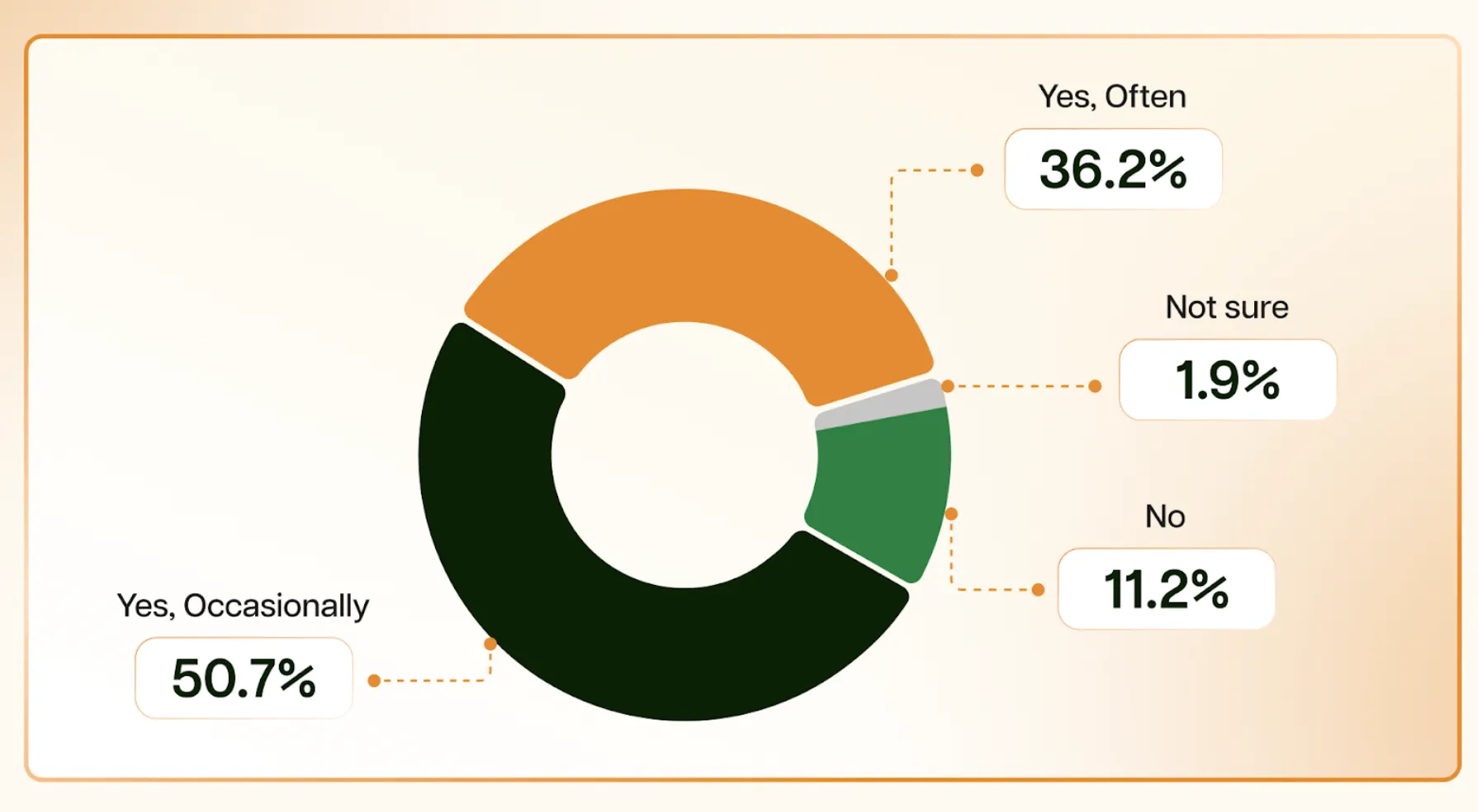
In our recent consumer study, nearly 87% of respondents said they often or occasionally see a product on social platforms or blogs and then search a marketplace to buy. Each touchpoint adds more color to the full painting; nothing exists in isolation.
Have You Seen a Product on Social/Blogs, Then Searched Marketplace to Buy?
This shift is redefining how product visibility is earned. The rise of Generative Engine Optimization (GEO) means discovery now depends on the context surrounding your products as much as your own site. Affiliates and creators play a central role in that ecosystem, shaping how both consumers and algorithms interpret what matters.
Affiliate marketing has evolved into a dual-purpose engine: driving measurable sales while building the distributed content layer that feeds back into AI-driven discovery. For brands navigating this transition, a strong affiliate strategy now sits at the intersection of three critical growth channels: SEO, creator influence, and generative AI visibility.
The Next Layer of Search: How Answer Engines Decide What to Show
GEO is what happens when SEO principles meet conversational AI. Traditional SEO optimizes for rankings and clicks. GEO optimizes for being cited, synthesized, and woven into answers. The goal shifts from earning a position on a results page to becoming part of the response itself. A top-tier SEO page might rank third on Google but get cited zero times by ChatGPT, because citation rewards context, narrative, and human voice.
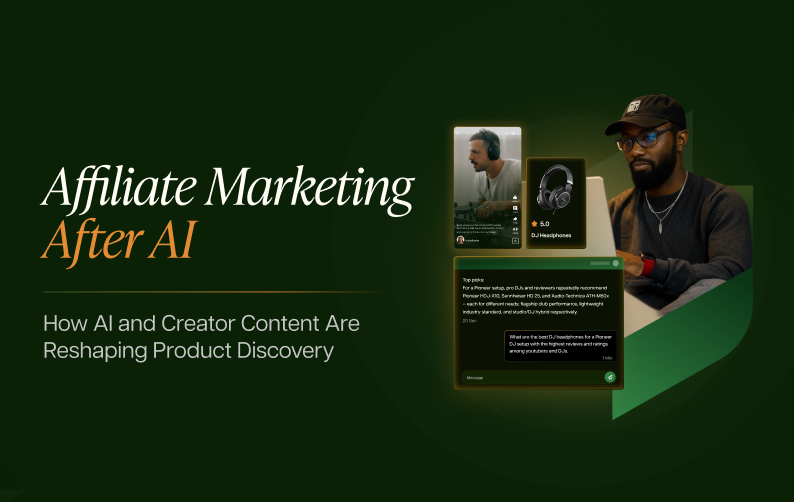
Answer engines like ChatGPT, Perplexity, and Google’s AI Overview read the internet differently. Instead of scanning for keywords, they interpret meaning, relationships, and trust signals. When someone asks for product advice, these systems synthesize information across reviews, forums, blogs, and video transcripts, deciding which insights to surface and which creators to cite.
The pattern is clear: recency, context, and credibility have become the primary signals of visibility. A video review posted last week carries more weight than a static product page from a year ago.
For marketers, this changes where visibility is built. Technical SEO is still valuable, but it’s no longer enough to optimize your own site and hope for high rankings. Review videos, Reddit threads, and independent blog posts provide the connective tissue answer engines need to move from raw specs to useful recommendations.
All this means affiliate and creator content is more important than ever. It not only drives high-quality external traffic, but also creates the distributed, authentic, continuously refreshed layer of information that answer engines rely on to construct responses. When a brand combines strong SEO foundations with an active network of affiliates creating timely, credible content, those two layers reinforce each other.
Affiliates as the New Discovery Network
41.1% of consumers describe creator product content as helpful, informative, or trustworthy. That independent voice carries far more weight than brand-controlled messaging, which can’t replicate authenticity.

For brands, this creates a halo effect that extends beyond traditional performance metrics. Affiliates drive direct conversions through tracked links, but their content also influences how products surface in AI-generated recommendations.
A shopper might ask ChatGPT for hiking boot recommendations and see your products cited based on an affiliate’s review video. That visibility shapes consideration, even if the conversion happens elsewhere later. Affiliate content works harder across more touchpoints than last-click attribution can measure.
This is the foundation of affiliate marketing’s new strategic role. It doesn’t just convert buyers, it builds the network of credible, third-party content that AI systems depend on to understand what matters.
Why Affiliates Keep Products Visible in AI Discovery
Affiliates aren’t just creating content, they’re constantly refreshing it. Their commissions depend on staying relevant, so they update reviews and rankings whenever products, prices, or features change. A YouTube creator revises a laptop comparison when a new model drops, or a blogger reorders kitchen appliance rankings when prices shift.
The result is a self-sustaining cycle of continuous updates where affiliate content stays current and algorithmically favored:
- Affiliates publish content
- Answer engines index that content
- Consumers discover products through AI-generated recommendations
- Affiliates update their content based on performance data
- Answer engines re-index the updated version
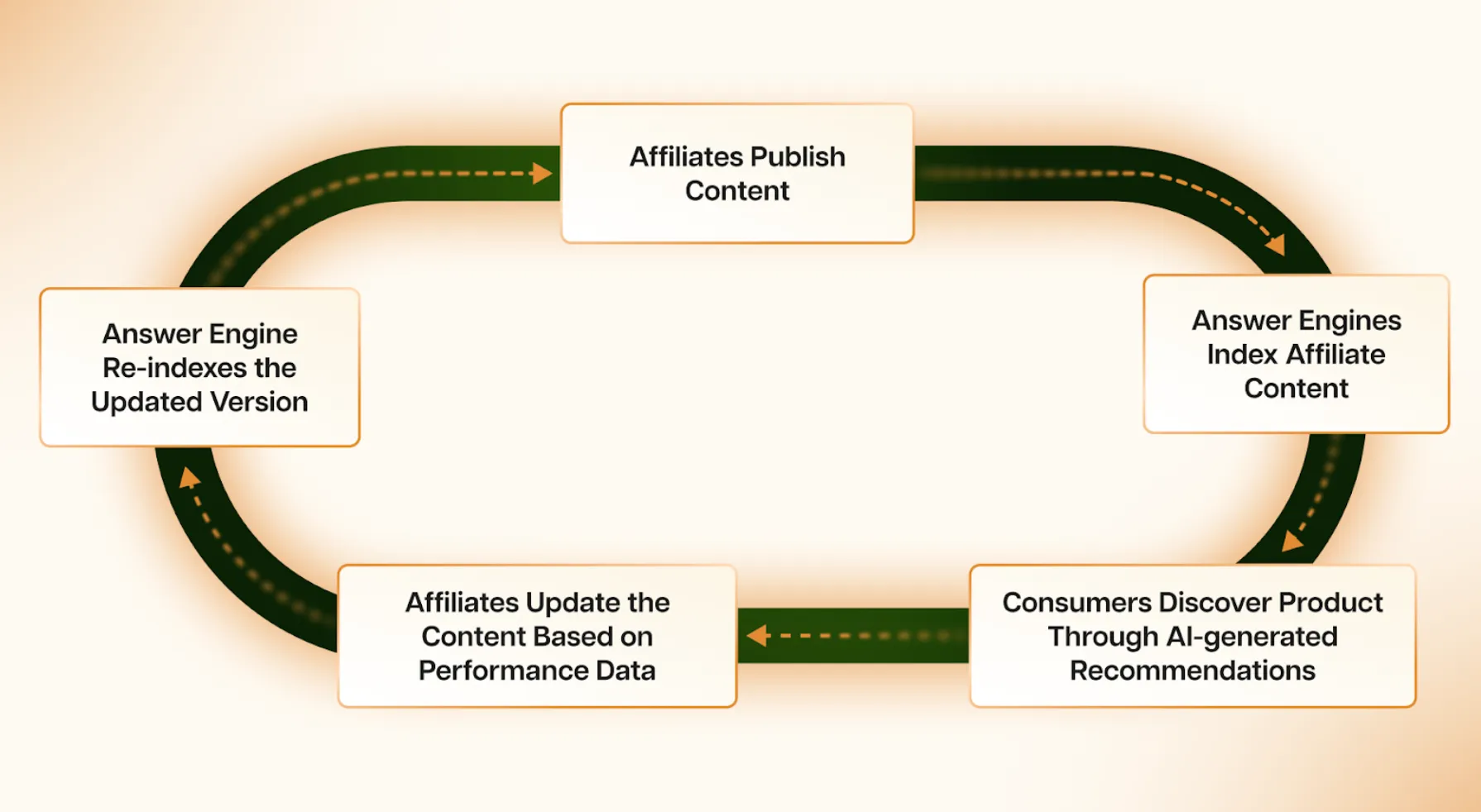
For brands, it is important to be aware that this loop only works if affiliates have the resources they need to keep content fresh: updated product assets, new product or feature information, and timely campaigns. When brands treat affiliates as ongoing GEO partners, the content stays active, accurate, and influential across both direct performance and AI-driven discovery.
Why Content Diversification Matters in AI Discovery
Our consumer research shows that creator formats dominate attention: short-form video captures 53.2%, YouTube reviews 35.7%, while traditional blogs account for 15.5%. Video has become especially influential.

Note: Respondents could select more than one source they trust for product recommendations, so total percentages exceed 100%.
Short-form content on TikTok and Instagram Reels captures attention and drives initial awareness. Long-form YouTube reviews provide the depth that answer engines parse for product comparisons. Blogs and forums add credibility when discussions feel organic and experience-driven.
For DTC brands, your own site content still anchors everything, it establishes authority and provides the foundational information that other formats reference. This is where technical SEO still matters most. But the strategic takeaway is diversification: a product with strong YouTube reviews, active Reddit discussions, credible blog coverage, as well as solid onsite content will surface more consistently than one that only relies on a single channel.
Adapting Your Affiliate Strategy for AI Discovery
The shift from search to AI-driven discovery is happening now, but it doesn’t require a complete overhaul. It requires awareness, intention, and a few strategic adjustments that strengthen both performance and visibility.
Audit: Start by auditing where your products already appear. Look across YouTube, blogs, Reddit, and social platforms to understand who’s talking about your brand or products, how they’re positioning them, and whether content is recent and accurate.
Align: Prioritize creators whose tone, voice, audience, and content style mirrors the trust signals your buyers respond to. Support content freshness by giving affiliates resources to update their content.
Activate: Balance your partnerships across video creators, long-form bloggers, and community voices. Each format feeds GEO differently.
Tracking AI visibility is still early-stage, there’s no dashboard for ChatGPT or Perplexity citations yet. However, brands can manually monitor emerging signals. Over time, these insights will guide how you invest in affiliates and formats.
Platforms like Levanta help brands scale affiliate programs that deliver on both fronts: measurable sales and the distributed content network that feeds AI-driven discovery. The result is performance you can track today and visibility that compounds over time as answer engines become a more central part of how people shop.
Read our latest research report where we show data that confirms what we’re already seeing: discovery has become multi-layered, and the brands leaning into affiliate marketing now are shaping how their products appear in the next generation of answers.
Levanta was built for this era, designed to help brands and affiliates grow together as discovery continues to evolve. Request a demo to see how Levanta can help you scale your affiliate program and capture the halo effect affiliate marketing creates in AI-driven discovery.