
TLDR
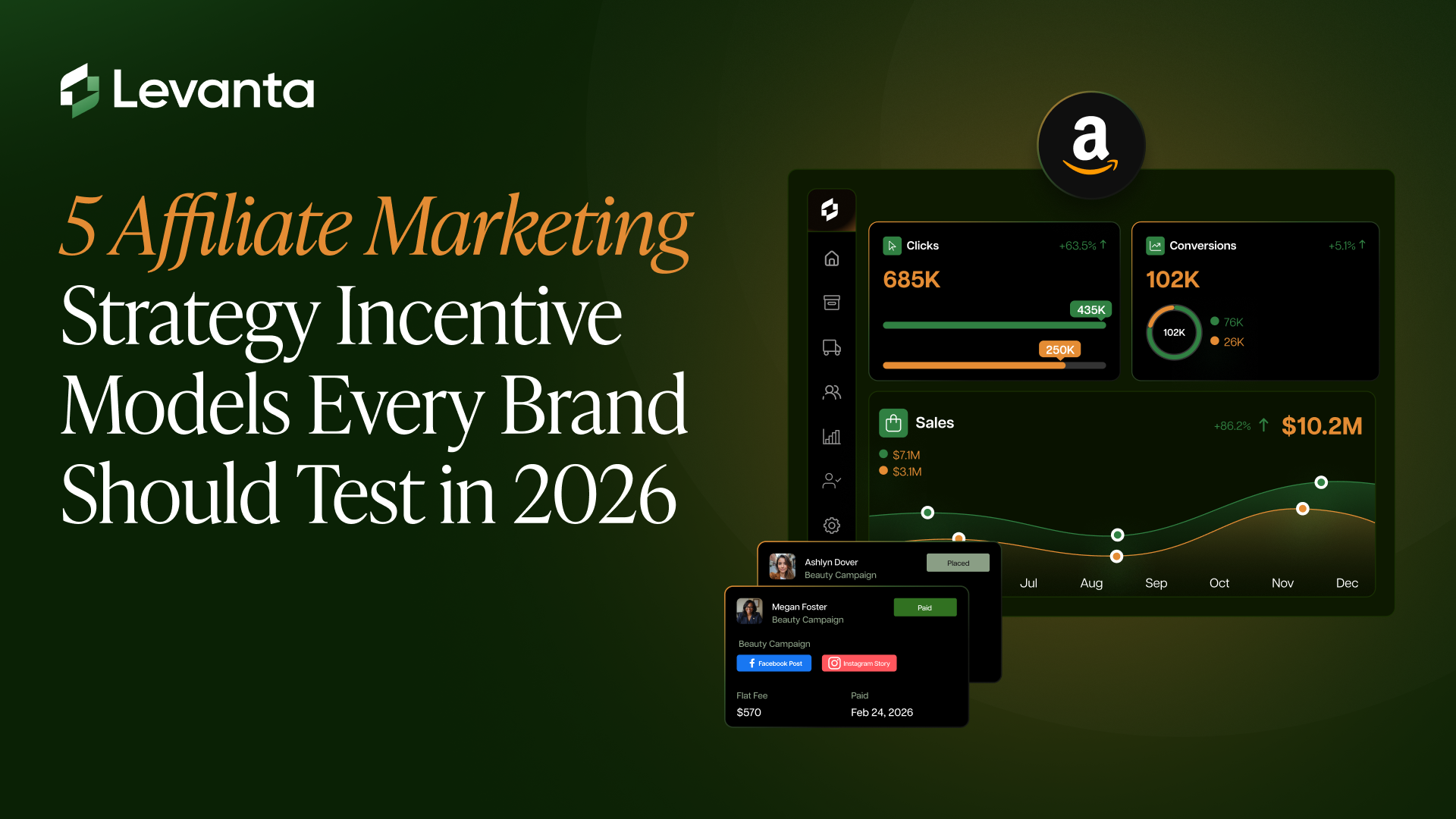
| Amazon fees are climbing and ad costs are not slowing down. Brands that treat affiliate marketing as an afterthought are leaving revenue on the table. The most effective affiliate marketing strategy in 2026 is not a single tactic. It is a layered incentive ecosystem. This post breaks down five incentive models (commission-based performance, paid placements, product sampling, bonus payments, and private commissions) that help brands attract creators, drive net-new-to-brand (NTB) sales, and scale without wasted spend. |
Why Your Affiliate Marketing Strategy Matters More Than Ever
Amazon fees are rising. Customer acquisition costs are not getting any cheaper. And brands that rely solely on ads are feeling it.
At the same time, affiliate marketing has evolved from a “nice-to-have” channel into one of the most powerful drivers of brand loyalty and new-to-brand (NTB) sales.
If you are not actively building and incentivizing your affiliate ecosystem in 2026, you are already behind.
The real question is not whether you should invest in affiliates. It is how to structure your affiliate marketing strategy so creators actually perform for your brand.
Here are five incentive models every brand should be testing.
1. Commission-Based Performance: Only Pay When Creators Drive a Sale
A cost-per-acquisition (CPA) model creates direct alignment between your brand and your creators.
This affiliate incentive model helps you:
- Eliminate wasted spend. You pay only when a sale is confirmed.
- Remove friction with a performance-first, “prove it” structure.
- Align incentives so your brand and creators win based on results.
Commissions vary depending on category, margin, and competition. But the key principle is this: if you want performance, you have to be competitive. Top creators compare commission rates across brands. If yours is not attractive, they will promote someone else.
2. Paid Placements: Guaranteed Content With Creative Control
If you have the budget to support larger creators or want to balance a lower commission rate with a flat fee, Paid Placements are a powerful lever.
They allow you to:
- Guarantee content creation on a set timeline.
- Maintain creative direction so messaging stays on brand.
- Unlock content boosting and future repost rights.
Paid placements are not always as expensive as brands assume. Some creators accept placements ranging from $100 to $1,000 depending on the format and their audience size.
3. Product Sampling: A Low-Risk Way to Build Affiliate Momentum
For early-stage brands or brands with tight budgets, product sampling can be a strong alternative to paid incentives. Not every creator will say yes. But remember, you are vetting them as much as they are vetting you.
For micro and emerging creators, sampling creates a mutually beneficial partnership that helps you:
- Lower financial risk while still building social proof and affiliate momentum.
- Build authentic relationships by letting creators experience the product firsthand.
When a creator genuinely likes what they received, their content reflects it. That authenticity converts.
4. Bonus Payments: Accelerate Performance During Key Moments
Prime Day. Black Friday/Cyber Monday. New product launches with zero reviews. Performance milestones. These are moments where urgency matters.
Offering bonus payment incentives during these windows helps you:
- Keep creators engaged throughout the campaign.
- Encourage higher content frequency when buyer intent is at its peak.
- Incentivize push during peak buying windows like Prime Day and BFCM.
- Reward top performers and make them more motivated to unlock the next tier.
If you want creators to treat your brand like a priority, reward them like one.
5. Private Commissions: Reward Your Best Creators and Protect Your Margins
This is how strong affiliate programs become elite.
Private commissions give you granular control at both the creator and product level. They allow you to:
- Increase rates for top performers who consistently deliver results.
- Boost specific ASINs or SKUs that need visibility.
- Support new product launches with targeted incentive bumps.
- Incentivize high-margin products to protect profitability.
Your highest-performing partners stay rewarded and motivated. Your margins stay intact.
How to Build a Layered Affiliate Marketing Strategy
The brands winning in 2026 understand one thing: affiliate marketing is not a single lever. It is a diversified incentive ecosystem.
Relying on one structure limits performance. Testing multiple incentive models allows you to:
- Attract different tiers of creators.
- Balance margin and scale.
- Increase new-to-brand sales.
- Strengthen long-term brand loyalty.
When structured correctly, your affiliate marketing strategy creates brand champions and long-term, successful partnerships.
With the right incentives and the right creator relationships, the possibilities are endless.
Key Takeaways
- A single incentive model is not enough. The strongest affiliate marketing strategies layer multiple models to reach different creator tiers and business goals.
- Commission-based performance (CPA) aligns incentives, but your rates need to be competitive or creators will promote other brands.
- Paid placements give you creative control and guaranteed content, often at lower costs than brands expect.
- Product sampling reduces risk and builds authentic creator relationships, especially for early-stage brands.
- Bonus payments drive urgency during peak buying windows like Prime Day and BFCM.
- Private commissions reward your best partners at the creator and product level, keeping top performers motivated.
- Affiliate marketing in 2026 is a growth engine, not an afterthought. Brands that invest in their creator ecosystem will outpace those that rely on ads alone.
Ready to build an affiliate marketing strategy that actually scales? Discover how Levanta can help you take your affiliate program to the next level.
Frequently Asked Questions About Affiliate Marketing Strategy
What is an affiliate marketing strategy?
An affiliate marketing strategy is a structured plan for how a brand recruits, incentivizes, and manages affiliate partners to drive sales. A strong strategy layers multiple incentive models, such as commissions, paid placements, product sampling, and bonus payments, to attract different creator tiers and maximize return on investment.
What is the best commission model for affiliate marketing?
The most common starting point is a commission-based performance model (CPA), where affiliates earn a percentage of each sale they generate. This aligns incentives between brand and creator because you only pay when a sale is confirmed. However, the best programs combine CPA with other models like paid placements and bonuses to stay competitive and retain top-performing creators.
How much should I pay affiliate creators?
Commission rates vary by product category, margin, and competitive landscape. Beyond commissions, brands can offer paid placements ranging from $100 to $1,000 depending on content format and audience size. The key is to benchmark against competitors in your category. If your rates are not competitive, top creators will promote other brands instead.
What are private commissions in affiliate marketing?
Private commissions are custom commission rates offered to specific affiliates rather than your entire program. They allow you to increase rates for top performers, boost specific products or ASINs, and support new launches with targeted incentive bumps. Private commissions give brands granular control at both the creator and product level.
How do I attract affiliates to my program?
Start by offering competitive commission rates that match or exceed others in your category. Layer in additional incentives like product sampling for micro creators, paid placements for larger partners, and bonus payments during peak buying windows like Prime Day and Black Friday. Creators evaluate programs based on earning potential, so a diversified incentive structure makes your brand more attractive.
What is net-new-to-brand (NTB) in affiliate marketing?
Net-new-to-brand (NTB) refers to customers who purchase from your brand for the first time through an affiliate referral. NTB is one of the most important metrics in affiliate marketing because it measures whether your program is driving genuine customer acquisition rather than simply converting shoppers who would have purchased anyway.